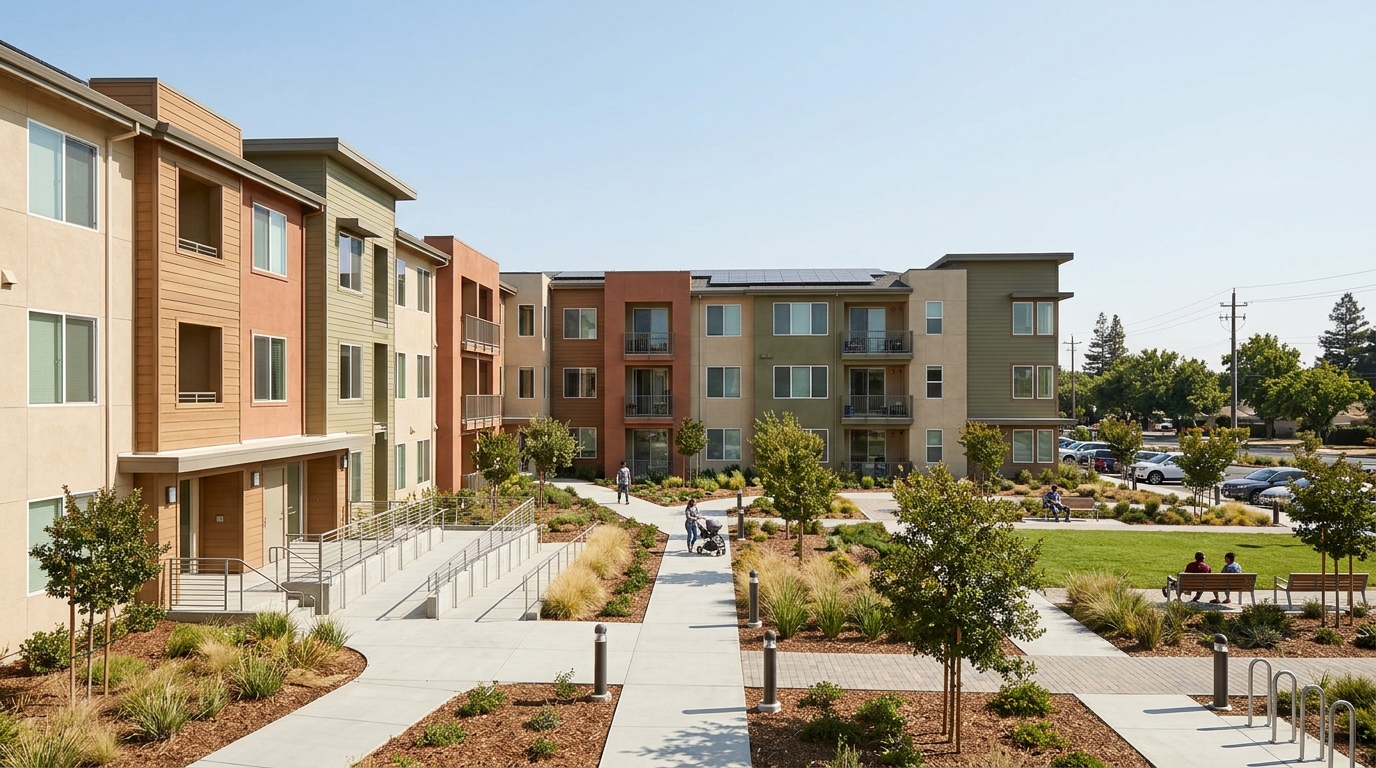
The project aims to provide rental homes for households meeting income eligibility requirements. Its second phase includes two new buildings, surface parking, and access to community amenities.
However, renters should understand that the affordable housing lottery for Phase 2 closed on May 20, 2026.
The developer initially anticipated move-ins beginning in October 2026, subject to construction progress. As of October 27, a confirmed completion or full occupancy announcement was not established in the sources reviewed.
Here is what potential renters and Elk Grove residents should know about the development, eligibility, rent information, and future application opportunities.
The Pardes Phase 2 Elk Grove: Development Overview
The Pardes is an affordable rental housing community being developed in two stages in southern Elk Grove.
The site is near the southeast corner of Poppy Ridge Road and Big Horn Boulevard.
The development is designed to serve households seeking apartments within designated income limits rather than unrestricted market-rate housing.
How the Two-Phase Apartment Community Works
The development’s first and second phases are intended to function as one coordinated residential community.
However, each phase has a different apartment count and income eligibility framework.
Phase 1: The First 96 Affordable Apartments
The first phase includes 96 residential units intended for qualifying individuals and families earning below 80 percent of Area Median Income.
It was completed before Phase 2, creating the first part of the larger apartment community.
The City’s housing information describes amenities and services intended to support residents beyond their apartments.
These include social and educational activities, job-search preparation, and assistance connecting with community resources.
Such services may be valuable for households seeking stable rental housing and broader community support.
However, participation arrangements and programme schedules depend on property management and partner organizations.
The first phase also includes parking facilities.
Its completed construction demonstrates that the development is not merely an early conceptual proposal.
Nevertheless, completion of Phase 1 does not automatically mean that all Phase 2 units are ready for occupancy.
Residents should distinguish the two phases when reviewing availability information.
Phase 2: Another 140 Homes for Qualifying Households
The second phase adds 140 apartments in two newly constructed buildings of three and four stories.
The City’s project description identifies households earning less than 70 percent of Area Median Income as the intended population for Phase 2.
Eight units are identified for households or individuals at risk of homelessness.
However, the exact documentation and referral procedures for those units should be confirmed directly with the responsible housing organization.
The two phases together total 236 apartment units.
These homes include a range of unit sizes intended to meet different household needs.
According to earlier municipal documents, the overall development includes one-, two-, and three-bedroom apartments.
However, the exact unit mix available in the second phase may differ from the totals for the combined project.
Potential renters should review current leasing information rather than assuming that every advertised floor plan is immediately available.
Resident Amenities and Energy-Efficient Design
The Pardes is intended to offer more than individual apartments.
Planning materials describe shared spaces and infrastructure that can support family life and neighborhood connections.
Play Areas, Community Rooms and Outdoor Spaces
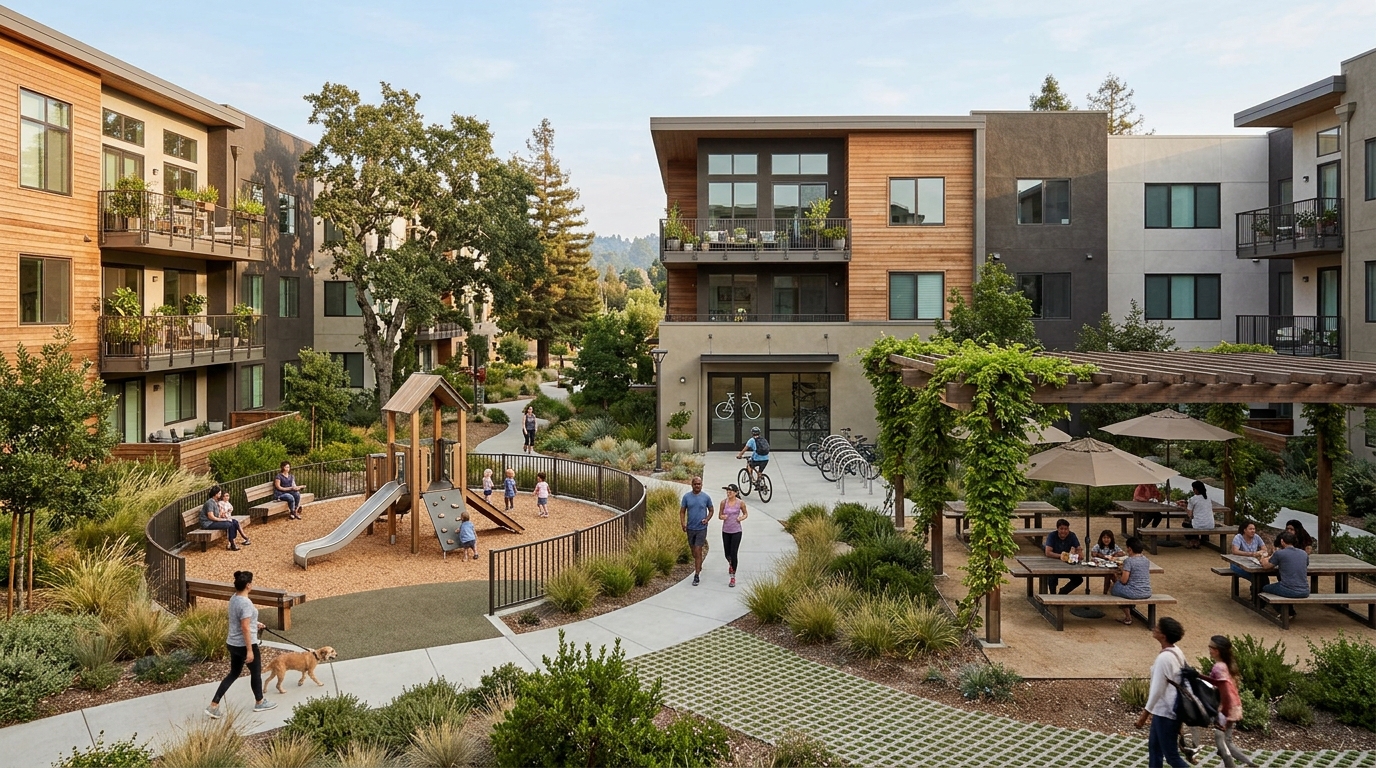
City planning documents identify amenities such as bicycle storage rooms, community clubrooms, children’s play areas, barbecue and picnic spaces, and potential fitness or co-working facilities.
These features could support residents who want convenient opportunities for recreation and social activities.
For example, a nearby play area can provide families with an alternative to travelling to a park for every short outdoor break.
Community rooms may also support educational programming or resident gatherings.
However, some amenities were identified in earlier planning materials as potential features rather than guaranteed completed facilities.
Residents should request an updated amenities list and the property’s rules before signing a lease.
They should also check whether any facilities require reservations, supervision, or additional fees.
The availability of community space can change according to maintenance and operating needs.
Consequently, conceptual images should not be treated as proof that every planned amenity is already operating.
Energy Standards and Long-Term Housing Costs
The development has been designed with attention to California’s building energy efficiency standards.
Its planning information references Title 24 requirements and additional sustainability measures.
For Phase 1, the City also describes plans involving solar panels and energy-performance evaluation.
These features can help reduce energy consumption when properly designed and operated.
However, energy-efficient construction does not mean that residents will have no electricity bills.
Actual household costs depend on utility rates, apartment characteristics, equipment, and individual usage.
Residents should ask which utilities are included in rent and which require separate accounts.
For a realistic household budget, consider electricity, internet, transportation, groceries, renter’s insurance, and other recurring expenses.
Rent affordability is only one part of maintaining a sustainable monthly budget.
The Pardes Phase 2 Lottery, Rents and Move-In Timeline
Affordable housing developments often receive substantial interest because rent restrictions can make certain apartments more accessible to qualifying households.
However, demand may exceed the number of available units.
The Pardes Phase 2 used a lottery process rather than guaranteeing housing to everyone who expressed interest.
Eligibility, Application Status and What Renters Should Do Next
The City’s official project webpage confirms that the Phase 2 housing lottery opened April 26 and closed May 20, 2026.
Applications submitted outside that period are not part of the announced lottery.
Is the Phase 2 lottery still open?
No. The City’s page clearly labels the affordable housing lottery as closed.
Therefore, readers should not rely on older articles encouraging applications before May 20.
Anyone claiming to accept new Phase 2 lottery entries through an unofficial website should be approached cautiously.
Prospective renters should use verified project contacts for questions about future availability or waiting-list procedures.
Do not send application fees or sensitive personal documents to unconfirmed third parties.
What income limits apply?
The second phase serves qualifying households earning below 70 percent of the applicable Area Median Income.
Eligibility depends on household size and the specific income restrictions attached to each apartment.
Area Median Income is a regional benchmark rather than the salary of an individual applicant.
That means income limits can differ between households containing one person and those with several members.
Applicants may need to provide documentation of household income, assets, and other eligibility information.
However, the exact application requirements should be taken from the project’s official housing process.
How much could an apartment cost?
The City’s published rent table lists a range of approximately $723 to $1,688 for one-bedroom units.
Two-bedroom units are listed from approximately $868 to $2,026, while three-bedroom units range from approximately $1,003 to $2,340.
However, these are published programme ranges, not a guarantee of the rent for a particular available apartment.
The actual amount depends on affordability restrictions, unit size, household eligibility, and updated programme limits.
The project page also notes that amounts are subject to change.
Renters should request the current rent schedule before making financial decisions.

When could Phase 2 residents move in?
The project initially targeted October 2026 for its first Phase 2 move-ins.
However, that date was conditional on construction completion.
Building inspections, final approvals, utility connections, and property management preparations can influence the schedule.
As of October 27, the reviewed official project page did not provide a verified announcement confirming that all Phase 2 units had opened.
Therefore, residents should contact the property team for the latest occupancy information.
Do not assume that a projected move-in month guarantees a particular apartment will be available on a specific date.
Can non-Elk Grove residents qualify?
According to the project’s official information, the Phase 2 lottery was open to applicants regardless of whether they already lived in Elk Grove.
However, participants still needed to satisfy other application and eligibility requirements.
Being eligible to apply does not mean a household was guaranteed an apartment.
Similarly, the completion of a lottery application does not establish that the applicant met all final qualification requirements.
Successful applicants may need to complete additional verification before leasing.
What about other affordable housing options?
Residents seeking housing now can explore the City’s broader rental housing resources.
Those pages can provide information about additional housing developments and assistance programs.
However, readers should verify each property’s current vacancy and waiting-list status independently.
Affordable housing programmes have different income limits, occupancy rules, and application procedures.
There is no universal form that automatically enters an applicant into every development.
Why affordable housing development matters locally
Additional rent-restricted apartments can help increase the variety of housing choices in Elk Grove.
They may serve families, workers, older residents, and other qualifying households seeking greater housing stability.
However, 140 new homes cannot independently meet every affordable housing need in a growing city.
The Pardes should be understood as one project within Elk Grove’s larger housing programme.
The City continues to support other residential development and planning initiatives.
For a different perspective on the city’s growth, read our Project Elevate development guide.
That project concerns a separate proposed commercial and mixed-use district rather than The Pardes apartments.
Frequently asked questions
How many apartments are in The Pardes?
The two phases together are planned to provide 236 units, including 140 in Phase 2.
Is The Pardes Phase 2 lottery still open?
No. It closed May 20, 2026.
What income group does Phase 2 serve?
Qualifying households earning below 70 percent of Area Median Income.
Does Phase 2 include family-sized apartments?
The development includes multiple apartment sizes, but applicants must verify available layouts and current eligibility.
When is Phase 2 expected to be completed?
The initial target was October 2026, subject to construction progress and final approvals.
Where is the official project information?
Visit the City of Elk Grove’s The Pardes project page.
Final thoughts
The Pardes Phase 2 Elk Grove is an important affordable housing development that adds 140 residences to an existing community.
Its income-restricted apartments and planned shared amenities may offer meaningful housing opportunities for qualifying households.
However, the 2026 lottery has ended and the original occupancy timeline remains subject to confirmation.
Prospective renters should rely on official eligibility, rent, and availability information before making commitments.
Editor’s note: Information reflects official City records available October 27, 2026. Rent limits, leasing arrangements, and occupancy schedules may change.